
Sam Watkins is one of the most important – and honest – voices to emerge from the American Civil War. Unlike generals who wrote to justify decisions or politicians who defended causes, Watkins wrote as a common soldier, recording what war actually felt like from the ground level.
His memoir, Co. Aytch: The First Tennessee Regiment or a Side Show to the Big Show, remains one of the most unvarnished accounts of soldier life ever produced, notable for its refusal to glorify combat or soften its consequences.
Join us as we explore the story of this writer-soldier and his legacy. Also, if you are traveling in Virginia, we invite you to take one of our Virginia Battlefield Tours.
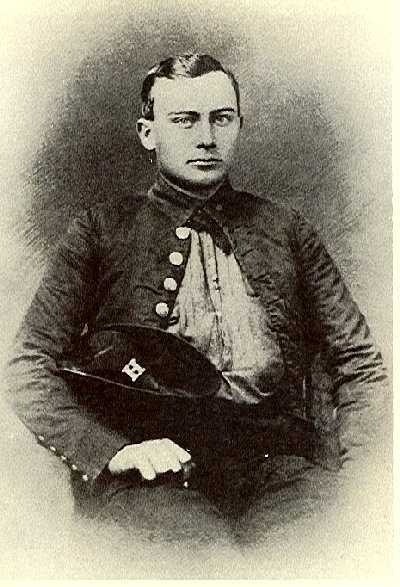
Sam Watkins’ Early Life
Born in 1839 in Columbia, Tennessee, Watkins enlisted in the Confederate Army at the age of 21, joining Company H (“Co. Aytch”), 1st Tennessee Infantry Regiment. Like many young men of his generation, he entered the war with little understanding of what lay ahead.
What distinguishes Watkins is not that he fought bravely – though he did – but that he later wrote about the war without nostalgia, bravado, or political defensiveness.

Watkins fought in many of the Western Theater’s major engagements, including Shiloh, Perryville, Stones River, Chickamauga, and the Atlanta Campaign. He endured long marches, hunger, exposure, disease, and the constant fear of death.
Over the course of the war, most of the men he enlisted with were killed, wounded, captured, or died from illness. By the war’s end, the regiment that had once marched proudly to battle had been reduced to a shadow of itself.
What makes Co. Aytch exceptional is Watkins’s tone. He does not write to vindicate the Confederacy, nor does he dwell on abstract ideals. Instead, he writes about exhaustion, confusion, terror, and grief. Battles are not heroic tableaux but chaotic, deafening experiences in which men stumble, flee, regroup, and die often without understanding what is happening around them. Watkins openly admits fear, mistakes, and moments of despair.
Co. Aytch: Against the Myths of War
Watkins repeatedly describes the gap between expectation and reality. Early enthusiasm fades quickly as the physical toll of campaigning becomes unavoidable. Soldiers starve, scavenge, and joke grimly about survival. Watkins recounts scenes of men collapsing from hunger, marching barefoot, or fighting over scraps of food. He writes of disease as an enemy as deadly as Union bullets, noting how illness hollowed out entire companies far from the battlefield.
Perhaps most striking is Watkins’s treatment of death. He does not sentimentalize it. Friends disappear suddenly. They are killed by artillery, struck down while marching, or left behind in shallow graves. There are no grand speeches, no noble last words. Death comes arbitrarily and often meaninglessly. Watkins records this plainly, allowing the cumulative weight of loss to speak for itself.
Importantly, Watkins’s writing also resists hatred. Although he fought for the Confederacy, he rarely demonizes Union soldiers. At times, he expresses sympathy for enemy troops who suffer in much the same ways as his own comrades.
The shared misery of war, rather than ideology, dominates his perspective. In this sense, Co. Aytch is less a Confederate memoir than a soldier’s memoir – one that highlights common humanity amid organized violence.

The Continued Significance of Co. Aytch
Watkins wrote Co. Aytch years after the war, publishing it in 1882. By then, many Civil War narratives were becoming increasingly romanticized, particularly in the South, where the “Lost Cause” interpretation was taking hold. Watkins’s work stands apart from that trend. While he never repudiated his service, he also never framed the war as glorious or redemptive. His loyalty was to the men he fought beside, not to a political myth.
This perspective gives Watkins enduring moral significance. He does not ask readers to admire the war or excuse its cause. Instead, he asks them to understand the cost paid by ordinary people swept into it. His compassion is directed downward, toward fellow soldiers, rather than upward toward leaders or abstractions.
After the war, Watkins lived a relatively quiet life in Tennessee. He worked as a clerk and later as a banker, carrying with him memories that would eventually find expression in his writing. He died in 1901, never knowing that his memoir would become one of the most widely read and respected firsthand accounts of the Civil War.
Today, historians value Co. Aytch precisely because it strips war of illusion. It reminds us that beyond strategy and ideology lie hunger, fear, boredom, and grief. Watkins offers no lessons about glory or destiny. What he offers instead is recognition – the recognition that war is endured by individuals, not abstractions.
Sam Watkins stands out because he refused to lie about what he saw. In doing so, he preserved a truth that transcends sides: that war, whatever its causes, is lived as suffering. His voice remains one of the clearest reminders that the most honest histories are often written not by those who commanded, but by those who survived.
Continue your exploration of Civil War history by browsing the Battlefield Tours of Virginia Blog Archive.