
Christmas Through the Eyes of Civil War Soldiers
For those of us living comfortable, modern lives, the holiday season conjures images of warmth, family gatherings, decorations, and sumptuous meals. But for thousands of men fighting in the American Civil War, Christmas amounted to smoky tents, frozen uniforms, and meager rations eaten far from home and kin.
The accounts that have come down to us from that period offer a powerful, sometimes heartbreaking, window into what Christmas meant for soldiers on both sides of the conflict.
Let’s explore together what Christmas meant for Civil War soldiers. And if you are in Virginia, be sure to consider joining us for a Civil War Battlefield Tour.

Winter Encampments, Sparse Rations, and Makeshift Traditions
Not all soldiers fought on Christmas Day. Many spent it in camps, winter quarters or forts. Under cold stars and over frozen ground, these men tried to summon a sense of Christmas with whatever resources they had.
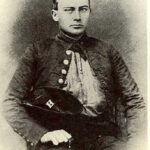
One of the most vivid surviving letters comes from Robert Gould Shaw, then a lieutenant in the 2nd Massachusetts Infantry. On December 25, 1861, writing from a guard tent near Frederick, Maryland, Shaw described a stark Christmas morning: “My Christmas Eve has been very much like many other eves during the last six months.” He recounted that earlier in the night his men had subdued two drunken comrades and tied a third to a tree. As midnight fell, it began to snow. To mark the season, Shaw treated himself to toast and hot coffee, though he worried every mouthful might bring demands from hungry comrades. He added dryly that, though the snow might have tempted Santa Claus, no stockings were hung outside the tent. (Source: Jake Wynn – Public Historian.)
Another firsthand account comes from the wartime diary of Henry Keiser, a soldier in the 95th and 96th Pennsylvania regiments. In 1861, at a winter camp near Alexandria, Virginia, he described receiving a new blanket as a “Christmas gift,” sharing a chicken dinner with a comrade, and reading a letter from home. These scraps of normalcy – a blanket, a shared meal, correspondence from loved ones – helped soldiers hold on to the idea of Christmas even amidst war.
Letters Home: Longing, Hope, Heartache
For many soldiers, Christmas letters to family at home were a lifeline to the world they had left behind. Their missives blended hope, sorrow, nostalgia, and a deep longing for reunion.
Some described fleeting pleasures: small gifts, holiday company when available, or moments of camaraderie in cold camps. Others confessed their pain – guilt for leaving loved ones behind, fear they might not live to see another Christmas, sadness at the absence of familiar warmth.
Because mail service was often slow or interrupted, messages sent on or around Christmas could arrive weeks or months later, if at all. That uncertainty turned every letter into a precious promise, a fragile thread linking battlefield and home.
These letters are not always eloquent; sometimes they consist of simple wishes: “Merry Christmas” or “Tell the children I think of them.” But it’s precisely in their simplicity and honesty that their power endures.

When Christmas Brought Hardship, Not Joy
For many soldiers, Christmas offered no comfort. Instead, it brought stark reminders of what had been lost, and ultimately, what was at stake.
Poor weather, inadequate clothing, and minimal rations made winter harsh. Hospitals filled with the wounded and dying offered little respite during the holidays. For soldiers in prison camps, Christmas meant deprivation and despair.
In some units, efforts at celebration met with strict military discipline. According to historical sources, one group was punished for celebratory gunfire on December 25, 1862. For them, Christmas was no bright respite, but a bitter marker of absence and loss.
Faith, Camaraderie, and the Search for Comfort
Yet even in darkness, many soldiers tried to keep alive what Christmas meant: hope, a sense of shared humanity, and, most powerfully, faith.
Some camps held informal services or sang hymns; others shared what little they had. Real or imagined, small comforts – a letter from home, a hardtack decorated like a tree, a blanket – became sacred symbols
.
According to historians, by the war’s end, Christmas had begun to take on a new cultural weight across the United States. Once a marginal holiday in many communities, it became a touchstone of memory. Christmas, more poignant than ever, was a time to mourn, remember, and pray for peace.
A Virginia Connection: War and Christmas in the Old Dominion
For many Virginians, the war blurred the boundaries between battlefield and home. Towns like Fredericksburg, Richmond, Petersburg, and others saw waves of troops, hospitals, and hardship.
Whether Union or Confederate camps, soldiers stationed in or moving through Virginia carried those winter tents, sparse meals, and longing letters with them. Their Christmas was no longer private. Though specific diary entries from Virginia camps are rarer in the public record, the broader union of soldier experiences makes it likely that many of these Christmases mirrored those described by Shaw, Keiser, and others.
Reflecting on the Christmas experiences of these young soldiers adds an extra sense of gratitude as we plan our own winter celebrations. At this most special time of year, it’s vital that we remember and pay tribute to the sacrifices made by those who came before us.
Take your exploration of Civil War history to the next level with a Civil War Battlefield Tour in Virginia.